5.29.2006

nothing is true

... everything is permitted

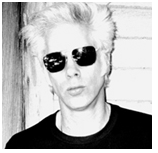
Jim Carroll
A Catholic Boy and a great American poet.

When we first met Jim Carroll (JC) in Santa Fe New Mexico, he excused himself to take a call. We waited among the flickering gas lamps, crusty-rimmed bottles of Cholula Hot Sauce and a fish tank full of poisonous sand snakes. The Honduran bartender mentioned that Jim ("Jeem") was getting a lot of calls these days just as Jim returned and took a seat. He was noticeably pale, bronze or golden and haggard. After an intellectual discourse on the merits of Ciudad Jaurez basement-tequila and green chili tacos, JC held forth on the past two decades of stardom and addiction.

Then he busted a move ...
When he finally let up and stopped kickin' the footboard, we all tumbled off our chairs and out into the night; warm, comfortable and with a star-scape flatter than the Salton Sea. Carroll showed up with a gross of Black Cat Bottle Rockets, a 4 liter jug of Carlo Rossi Burgundy and a dozen Roman Candles taped haphazardly around the neck of an old Dobro single cone resonator guitar. I had never seen such a thing nor felt so much danger, concentrated as it was, right there.

A call went out for matches and after the obligatory "we ain't got no stinkin' badges" jokes, a modern matchbook was produced. The matches were damp. They wouldn't light. Just enough action to produce a phospheros smear on that little patch of sandpaper below the staple, but no fire. Indie Filmmaker Jim Jarmusch was no help. He went for coffee and came back a little while later with a sack of organic-orange peel flavored scones from Balducci's upper west side location. The one where Richard Hell works.


Unforetunately, the rest of this story is subject to © copyright and can't be reprinted in full without permission.

Contact Doug P. Teever

i wanna be a race car passenger

mitch hedberg

memorial day


"I think we agree, the past is over."
George W. Bush

A list of coalition soldiers killed in action in Iraq

"It's not dark yet, but it's gettin' there."
Bob Dylan

Bill [Jones] used to mention
Vietnam sometimes --
Snippets of story
I heard but never
felt.
He might have been describing
Mars or
Disneyland
It was an untouchable
Part of his past.

Last October,
Our Pastor told the Bishop
About Bill's poetry.
While he was here, he
Dropped by.
Bill did his funny ones
Two or three
And mentioned in passing
He had written some
Serious Poems
About his war.

The Bishop asked to hear one, so
Bill went away and came
Back with
"Body Burning Detail."
Halfway through it,
He broke down.

I just remember him
Sitting there,
Shaking,
His agony
His anguish
Pouring down his face
And suddenly,
For me,
It was real.
I could feel
with my heart
and soul
What he could never
Describe
I think
I began to
Understand.

from the Bishop

I have a natural connection
With Bill
My Great-Aunt was born
near the ranch where
He works.
I like cowboys
Love Poetry,
enjoyed his story
about coming to Lander
to Recover.
He recited some funny poems,
We laughed and laughed.
It's all great

Then Bill said
There is something I've never
Read before I wonder
If it would be all right.
He took it out
began to read.
It became quiet
By the time he had to stop
We all were weeping.
When it was over,
We sat and talked
and prayed.

I have used Bill's poem
Several times
Since then,

and I carry it with me.

from Bill

I almost couldn't get through
"Body Burning Detail."
I tried
But I couldn't
Speak.
The Bishop said
I'm so sorry
so sorry,
You don't have to
finish it
and I said
Yes I do
Yes
I do


Here's the original ...

The Body Burning Detail

Three soldiers from the North
Burned for reasons
of Sanitation.
Arms shrunk to flippers
Charred buttocks thrust skyward
They burned for five days.
It was hard to swallow
Difficult to eat
With the sweet smoke of seared
Flesh, like a fog,
Everywhere.

Twenty-five years later
They burn still.
Across sense and time
The faint unwelcome odor
Rises in odd places.
With a load of leaves
At the city dump
A floating wisp of smoke
From the burning soldiers
Mingles with the stench
Of household garbage.

Once, while watching young boys
Kick a soccer ball,
The Death Smell filled my lungs.
As I ran, choking
Panic unfolded
Fluttering wings
Of fear and remorse.
A narrow escape.

A letter, snatched from the flames
The day we burned them
Is hidden away
In a shoebox
With gag birthday cards,
Buttons, string, rubber bands.
A letter from home?
The Oriental words,
Delicately framed
Are still a mystery.


5.27.2006

kiss kitty


Bored bartender plays Kiss Kitty
Ed Martley

Rapid City Journal
May 19, 2006

The pay at my newspaper job was typically abysmal, so I was forced to find part-time work. The only thing open was as a bartender at the toughest saloon in that small Wyoming town. You know, where the bartender keeps a baseball bat under the bar and has orders to use it. (Had I even touched that bat, someone would have crammed it down my throat.)

There were so many fights that bar management feared the place would get an even worse reputation, as if that were possible. The drinking part of the bar was small, but its adjoining room was a dance hall. So after Buck reduced Big Chester to rubble for the favors of Fat Sally, no more fights were allowed in the bar section. Take 'em in the dance hall and close the door. We'll check for bodies at closing time.

Kiss Kitty

There were, of course, some memorable characters who would show up at the saloon, among them a beautiful 22-year-old named Kitty. When Kitty brushed her rich dark hair and wore her yellow dress, it was hard to breathe when you looked at her. My roommate, Roy, also worked part-time at the saloon, and we became friends with Kitty
Kitty loathed truck drivers, probably because of some incident in her past. Therefore, she dated all the truck drivers she could in hopes of doing something awful to them.

I guess that's why the 'Kiss Kitty' game got started. When Roy and I were behind the bar, Kitty would bring in a truck driver, sit at a table in the middle of the room and order up some beers. After a while, there would be a 'power failure' that plunged the basement bar into darkness, and either Roy or I would sneak over and kiss Kitty. While one of us was doing the kissing, the other controlled the light switch and would flick it on after a few seconds.

It wasn't long before the truck driver began to smell a rat, but since it was dark when we were poaching on 'his girl,' he couldn't figure it out. Until the light went on too quickly. I forget who was kissing Kitty at the time, but her escort flew into a rage.

He hadn't noticed that at the adjoining table were the five members of the Case Club (a hefty group who gathered every Saturday afternoon so each of them could drink a case of beer). The club members arose as one, dragged the truck driver into the dance hall and administered a friendly drubbing. Then, they threw him out in the street. We had some great laughs, especially Kitty.

Lovers

One day, Joe showed up at the saloon with a nickel in his pocket and a guitar on his back, wondering if we needed a singer. Sure, management said, if he was willing to work for tips. We built a tiny plywood platform on the bar, just big enough for Joe to teeter on a rickety chair.

It turned out that Joe was a darn good entertainer, able to pick and sing both old and new stuff. 'Auctioneer' by Leroy Van Dyke was popular at the time, and Joe sang it well. The song's rapid-fire auction patter was easy for him.

He was a happy-go-lucky guy, and it appeared he had only one problem - his girlfriend, Kim. Kim was a bad influence on Joe. When she was in town, the pair would sit in a dark corner of the saloon, sinking into their cups and arguing horribly. Then, they would go home.

One night, Joe came into work glum and kind of funny-looking. We couldn't figure out exactly what was wrong until someone asked him to sing 'Auctioneer.' Then it struck us: Joe did not have any teeth. You can't imagine how his lips flapped and sprayed when he launched into the patter. It was wonderful, although you had to stand well back.

Joe would never tell what happened to the teeth.

Conscientious bartender

One Saturday afternoon, not another soul in the place, I was polishing glasses when a well-dressed couple in their 40s came in. I had never seen a well-dressed person in the saloon, so I was very impressed. They were nice people, too, and chatted with me for a while before asking where the slot machines were; they wanted to burn a few nickels. I showed them where we kept the slots hidden, and they started pulling handles.

I returned to the bar, but as the couple were my only customers, and I wanted to treat them right because they were well-dressed, I would pop back frequently to see if they needed anything, or just to exchange pleasantries. They stayed about 20 minutes.

The next Monday when I was making my regular reporter rounds, I stopped in at the sheriff?'s office.
'Lord, yes,' says Oscar the undersheriff. 'There was a couple got caught drilling slot machines. The guy told me they had cleaned out every one in town, except at the saloon. He said, 'That dumb kid behind the bar was such a pest we didn't have time to drill the machines.'

Contact Ed at emartley@aol.com.

Reprinted from the Rapid City Journal with Ed Martley's written permission.


in the spirit of frank fools crow


Mass Grave Site at Wounded Knee, Lakota Territory.

There is no consensus among Native Americans or outside observers regarding the definition of power, but the general view seems to be that power comes initially from a supernatural source or sources, and that it is best described as an astounding and electric like energy that pervades the universe. Power is present everywhere, in ever varying degrees in everything. This power exists in everything so that it can justifiably be said that each of us is, in a sense, part of this power. Fools Crow expressed the idea that it was his belief in this power, which he recognized as an entity, that made his communication more effective. In order to prepare for receiving and using the power, he performed a simple, yet powerful, prayer/ceremony.

With his eyes closed, he began to pull with both hands at his chest and abdomen as if he were pulling out evil, negative things or stumbling blocks. He grabbed many handfuls, and threw away what he had gathered.

He clutched at the air above him, where he seized unseen things in his head and body.

Finally, he started to pull invisible things out of his chest and body, holding both hands side by side in front of him and threw what he was clutching out into an invisible audience.

As he sang a "sound song" to the Higher Powers, he became like a clean new hollow bone.

I cured with the power that came through me. Of course, it was not I who cured, it was the power from the Outer World, the visions and the ceremonies had only made me like a hole through which the power could come to the two leggeds. If I thought that I was doing it myself, the hole would close up and no power could come through. Then everything I could do would be foolish.
Postscript: Hootenanny dug up this letter from decorated war veteran, Presidential contender and US Senator from Arizona, Mr. John McCain:

From: Senator John McCain - Chairman Senate Committee on Indian Affairs

Concerning: Rescindment of Medals of (dis)Honor

Date: June 24, 1996

Dear Mr. Dill,

Thank you for your recent letters, together with signatures and comments from other citizens via the Internet, proposing that Congress rescind seventeen Medals of Honor awarded to U.S. Army personnel for actions at Wounded Knee, South Dakota, on December 29, 1890, and at Drexel Mission on the following day.

I appreciate why you view with dismay the award of the nation's highest decoration for valor to soldiers of the United States Army for their individual efforts in an action that resulted in the death or wounding of as many as 370 Indian men, women and children. I also appreciate the concern that these awards can be viewed as diminishing the value of Medals of Honor awarded for conduct in other conflicts.

The policies and decisions of the United States Government that led to the Army's being at Wounded Knee in 1890 doubtless can be characterized as unjust, unwise, or worse. Nevertheless, a retrospective judgement that the Government's policies and actions were dishonorable does not warrant rescinding the medals awarded to individual soldiers for bravery in a brief, fierce fight in which 25 soldiers were killed and 45 others wounded. Neither today's standards for awarding the medal nor policies of the United States with regard to Indian tribes are what they were in 1890.

The criteria by which the Medal of Honor is awarded have changed greatly since the original, ambiguous, nineteenth century authorization for the medal that gave commanders a wide latitude in choosing men to receive it. Soldiers could even nominate themselves for the award, and did. Between 1891 and 1897, over 500 medals were awarded for actions in the Civil War, more than three decades earlier. These awards led to the formation of the Medal of Honor Legion, and organization of recipients concerned that wholesale bestowal of the award was weakening the medal's prestige.

In part due to the efforts of the Medal of Honor Legion, President Wilson in 1916 signed a law that clarified the procedures and standards of proof for awarding the Medal of Honor. To receive the medal, one must demonstrate distinguished gallantry or intrepity, at the risk of life, above and beyond the call of duty. The 1916 law also provided for a board of retired generals to review each of the 2,625 Army medals awarded for conduct during campaigns against Indian tribes between 1861 and 198, including Wounded Knee. As a result of this review, 911 medals were rescinded, all because the recipients were judged not to have distinguished themselves in combat and at the risk of their lives.

In 1990, in an unprecedented action the 101st Congress passed Senate COncurrent Resolution 153, which apologized to the Sioux people for the Wounded Knee massacre and expressed support for the establishment of a "suitable and appropriate memorial to those who were tragically slain at Wounded Knee." Since then, descendents of the Wounded Knee victims and survivors, the Oglala Sioux and Cheyenne River Sioux tribal governments, the State of South Dakota, Members of Congress and the U.S. Department of the Interior have considered a number of proposals, including a National Tribal Park, as an appropriate memorial.

While a consensus on a Wounded Knee memorial proposal remains elusive, efforts to achieve such a consensus are continuing. I support these efforts in the belief that establishing a well-conceived memorial to the victims of Wounded Knee is much preferable to attempting to strip long-dead soldiers of a medal which they might not merit under today's standards.

Sincerely,

John McCain - Chairman


Hootenanny's opines:
Senator McCain,
We sincerely respect and honor your sacrifice as an American soldier, but we believe medals should not have been issued in this instance and were not merited or justified under any standard.
We believe an injustice should be rectified. We believe it's a principle on which this society was founded. We believe there is injustice in failing to reclaim honor that wasn't earned.
You suggest the passage of time and changing standards make it impractical to retrieve these medals and honors but we think the passage of time only compounds a callous and sickening error.
Senator McCain, we can't and won't encourage our readers to vote for a candidate or political party that elevates form over substance. Please sponsor new legislation to revoke the (dis)honors distributed to 7th Cavalry Soldiers for their action at Wounded Knee in the Lakota Nation in December 1890.

Senator, for your convenience we've appended the recipients names. etc. Please take a look.

(1) Austin, William G., Sergeant, Company E, 7th calvalry, issued June 27, 1891:
"While the Indians were concealed in a ravine, assisted men on the skirmish line, directing their fire, etc., and using every effort to dislodge the enemy."

Entered service at New York, N.Y. Born, Galveston, Tex.

(2) Clancy, John E., Musician, Company E, First U.S. calvalry, issued January 23, 1892:
His citation stated that he had rescued wounded soldiers, twice. Clancy was courtmartialed eight times during his career, twice between the fight at Wounded Knee and the receipt of his medal.

New York, N.Y.

(3) Feaster, Mosheim, Private, Company E, 7th calvalry, issued June 23, 1891 for
"Extraordinary gallantry."

Entered service at Schellburg, Pa. Born, Schellburg, Pa.

"...the officer who who recommended him was more than a quarter of a mile away at the time of Feasters's heroic action. However, three affidavits were given atteting to his acts. The three men who signed these statements were friends of Feaster and fellow members of Troop E. These witnesses also received Medals of Honor."
(4) Garlington, Ernest A., 1st Lieutenant, 7th calvalry, issued September 26, 1893 for
"Distinguished gallantry."

Entered service at Athens, Ga. Born, 20 February 1853, Newberry, S.C.

(5) Gresham, John C., 1st Lieutenant, 7th calvalry, issued March 26, 1895 because he
"Voluntarily led a party into a ravine to dislodge Sioux indians concealed therein. He was wounded during the action."

Entered service at Lancaster Courthouse, Va. Born, Virginia.

"A unsigned, undated letter in Gresham's file states that no records could be found of Gresham's wounds, and curiously, the regimental returns for January 1891 show him "on duty." There is, however, mention elsewhere that during the fighting Gresham 'received an abrasion on the nose from a passing bullet.'

Later in his career Gresham was implicated in a case where funds belonging to a student in his charge were missing. There is no record of the outcome, but he was ordered to retire with in six months after these allegations were made. A medical report tells of his 'outbreaks of fury over trivial matters...[and]...mental depression objectively shown by a permanent expresion of dissatisfaction.'"

(6) Hamilton, Mathew H., Private, Company G, 7th calvalry, issued May 5, 1891
for "Bravery in action."

Ireland.

...[medal granted for] "conspicuous bravery in rounding up and bringing to the skirmish line a stampeded pack mule...Company G was not in a direct line of fire. Common sense would suggest animals frightened by gunfire would run away from the shooting. It almost seems Hamilton was awarded the Medal of Honor for riding away from the fighting."
(7) Hartzog, Joshua B., Private, Company E, 1st Artillery, issued March 24, 1891 because he
"Went to the rescue of the commanding officer who had fallen severely wounded, picked him up, and carried him out of range of the hostile guns."

Paulding County, Ohio

"All of the indians opened fire on us. One of my men went for ammunition and didn't come back. ...My captain called to me to come back, but I kept moving nearer the indians, and kept shooting. Lieutenant Hawthorne came toward me and was calling, when suddenly I heard him say: 'Oh, my God!' Looking around, I saw him lying of his side, and then I knew he had been hit. Hartzog ran to him and carried him back behind the hill. .."]

(8) Hawthorne, Harry L., 2nd Lieutenant, 2nd US Artillery, issued 10.11.1892,

"Distinguished conduct in battle with hostile indians."

Entered service in Kentucky. Born, 1860, Minnesota.

[Hawthorne was responsible for two "Hotchkiss Breech-loading Steel Mountain Rifles, caliber 1.65 inches; length of bore, 24.72 calibers; weight of tube, 116.6 pounds; weight of carriage, 220 pounds; weight of exploding cartridge, 2 pounds 10 ounces; effective range, 4,200 yards."]

[Hawthorne's] "wound was so severe that he was forced to spend several years away from field duty. One of his assignments was as professor of military science at the Massachusetts Institute of Technology. He eventually gave up that post because of teasing he received from the students. This harassment was directed toward the army in general and at Hawthorne in particular...[because] The students believed there had been a massacre at Wounded Knee and blamed Hawthorne and the Army."

["...The bursting artillery rounds churned up the earth and caved in banks. ...a Hotchkiss shell punch[ed] a six-inch hole in the middle of a man's stomach. Up and down the ravine the People sang death songs..."An occasional shot came from the teepees. To stop this, the battery raked the Miniconjou camp from one end to the other. Flying shrapnel shredded the lodges and sought out every living thing.]

(9) Hillock, Marvin C., Private, Company B, 7th calvalry , issued April 16, 1891 for

"Distinguished bravery."

Entered service at Lead City, S. Dak. Born, Michigan.

(10) Hobday, George, Cook, 7th calvalry, Company K, issued for
"Conspicuous and gallant conduct in battle and [because he] was noticed by several officers.

Information from draft copies of his recommendation indicated his primary act of bravey was 'voluntarily leaving his work as a cook.'"

Pulaski County, IL.


(11) Jetter, Bernhard, Sergeant, 7th calvalry, Company A, issued April 4, 1891 for
"Distinguished bravery."
(12) Loyd, George, Sergeant, Company I, 7th calvalry , issued April 16, 1891 for
[Loyd] "was a veteran of the Little Big Horn campaign [and] on his sixth enlistment. Two years, almost to the day [of receipt of his medal], he committed suicide. The only mention in the regimental record is that he died by 'shooting himself through the head.'"
"Bravery, especially after having been severely wounded through the lung."

(13) McMillan, Albert W., Sergeant, Company E., 7th calvalry, issued June

23, 1891 because:

"While engaged with Indians concealed in a ravine, he assisted the men on the skirmish line, directed their fire, encouraged them by example, and used every effort to dislodge the enemy."

Entered service at Baltimore, Md. Born, Baltimore, Md.

"He was promoted to sergeant major prior to April 6, 1891. For reasons not found in his records, he was demoted to private before his discharge on September 21, 1892."
(14) Neder, Adam, Corporal, Company A, 7th calvalry, issued for
"gallantry in action...One of the citations says Neder was wounded; then that entry is struck through."
(15) Sullivan, Thomas, Private, Company E., 7th calvalry, issued June 23, 1891 for
"exposing [himself] to the enemy"

Entered service at Newark, N.J. Born, Ireland.

(16) Toy, Frederich E., First Sergeant, Company G, 7th calvalry, issued May 26, 1891 for
"bravery."
(17) Trautman, Jacob, First Sergeant, Company I, 7th calvalry, issued March 27,1891 because he
"Killed a hostile indian at close quarters, and, although entitled to retirement from service, remained to the close of the campaign."
(18) Ward, James, Sergeant, Company B, 7th calvalry, December 29, 1890, award issued April 16, 1891, because he
"continued to fight after being severely wounded."

Entered service at Boston, Mass. Born, Quincy, Mass.

"Ward was reported as having been severely wounded, though no other records, medical or otherwise, could be found to support this.
(19) Weinert, Paul H., Corporal, Battery E, First U.S. Artillery , award issued for advancing with Hotchkiss gun into ravine in pursuit of women and children... Weinert later commented:
"With his gun less than 300 yards away Weinert's firing inflicted terrible damage, undoubtedly killing and wounding many women and children...Later in the decade Weinert adorned with his Medal of Honor, toured with Buffalo Bill Cody's Wild West show as a member of it's color guard.

"I expected a court martial, but what was my surprise when gruff old Allyn Capron, my captain, came up to me and grasped me by the shoulders and said to the officers and men: 'That's the kind of men I have in my battery.'"

Entered service at Baltimore, Md. Born, Germany.

Taking the place of his commanding officer, who had fallen severely wounded, hr galantly served his piece, after fire advancing it [the Hotchkiss gun] to a better position.
(20) Ziegner, Hermann, Private, Company E, 7th calvalry, Wounded Knee, 1890, issued 6.23.91 for "conspicuous bravery."


Thanks for your prompt attention!

The Hoots


haboob

Hey!
The Hoot is back on the air after a fruitful trip to the desert southwest. Our corporate swag flew into PHX Sky Harbor during an early season haboob, the oxy-masks dropped but since you can't drink through the mask, the Hoots decided to ride it out. US Air 737 lost a wing bolt and a tire but landed safely and docked ontime. At the "office", much was accomplished; axes were ground and arrows were sharpened in the 100 degree heat. Numerous meetings were held over large wooden tables in climate-controlled rooms with business experts conferencing in from as far away as North Carolina. We worked so hard we had to have lunch delivered in more than once. We didn't even get a chance to use all of our drink tickets in the Executive Lounge at the Sky Harbor Hilton! And, unforetunately, we expensed some Hootenanny "risk-capital" on Cuban's Mavs and couldn't cover the vig in cash - - - so we'll be in Phoenix until the title loan clears the Black Canyon Western Union at 8675 W. Dunlap in Glendale.
Accordingly, we are temporarily relocating the corporate operation to the Phoenix metro pending conditions more favorable to our liquidity, finance-wise.
That does not mean we're out of business. Donations are still being actively sought and accepted by the Hootenanny Provisional Poolside Command (the HP2C) c/o Douglas P. Teever at The New Arizona "Biltmore" on Alma School Road in Chandler.*


By the way, this is a great new LP from Mason Jennings.


http://www.masonjennings.com/


DISCLAIMER: If you steal this music (and you can't do it from here), it's on Sony so be careful and download it from an offshore or "Russian" provider. But hey, don't steal music, just go to the shows!

*Not the real Arizona Biltmore. This one's in Mesa.

5.21.2006

Hiatus

Hootenanny will be on hiatus until May 27, 2006. Thanks!

5.19.2006

hootenanny music pc

Just check out the next few posts. It ain't hi-fi or high-def, but it's quality music videos on your PC direct from Hootenanny and only the best viral video hosts.

Enjoy.

lawrence welk's velvet underground

5.18.2006

hank 3

7 months 39 days

mr. greengenes requests old crow

Old Crow Medicine Show: Wagon Wheel

PQH

Achin' To Be - Studio Cut


teever prefers fugazi

Fugazi - Waiting Room - Live 1988

5.17.2006

go get 'em george


From the Office of The President of The United States, George W. Bush.
Monday, May 15, 2006
Click here for the full transcript in the Washington Post

"We will construct high-tech fences in urban corridors and build new patrol roads and barriers in rural areas."

"We will employ motion sensors, infrared cameras and unmanned aerial vehicles ... up to 6,000 [US National] Guard members will be deployed to our southern border."

" [But] The United States is not going to militarize the southern border."

calvin, i don't think that's hobbes


5.16.2006

i can't believe i ate the whole thing

The case has gone to the jury.
The Department of Justice argues that the rich guys made off with the Enron cash while the shareholders and employees (though employees less importantly because they're a relative tax burden) got stiffed.
The defense argues that no written laws were broken - the rich Enron guys loved their employees and shareholders (though shareholders to a lesser extent because, you know, employees come first in the minds of corporate executives) and are now suffering at the hands of a politically motivated witch hunt.

Is the DOJ pursuing criminal charges because a DOJ victory closes the door on a scandal that's bigger than Ken Lay and Jeff Skilling? They'll have us believe that a favorable verdict will neutralize the corporate practice of chasing earnings reports for Wall Street investors regardless of actual adjusted income.
In anticipation of the slaughter, Skilling hired LA Media/Contract Attny Daniel (Electroboy) Petrocelli to pursue the nuclear-sized burst of civil legal issues that will result from an acquittal or an appeal, if that's the case.
Ken Lay will most likely just disappear to Aspen.

Did Ken Lay and Jeff Skilling break the law. Yeah, I suppose so. You don't have to look very hard. Everybody's very own criminal record is readily available on the internet for a small fee. Should Ken and Jeff be pursued vigorously via the civil court system for the last spare penny sewn into their breast pocket? Why not? More money for the attorneys and more of our tax dollars expensed for the courtrooms, etc., to accommodate the folly.

On the other hand, did the US Department of Justice pursue an arguably unprincipled and intentionally intimidating investigation in an attempt to raise a criminal prosecution in an otherwise civil legal matter? Well heck, our boys wouldn't do that, would they? That's against the law ... isn't it? I think it is, but I'll have to check since the law may have changed (Patriot Act and all that).

Stay Tuned


5.15.2006

northwest corner news


Reprinted with permission.
Ruby I. Gabriel, Western Region Director
Hootenanny Publishing (2006).

Click on the graphic for a big version of the original article.
PS: Creative Commons, the new Anarchy.

everybody's tryin' to be my baby


Since I got my new ride!
The Corky J Racer
(CR1)

At Corky J's, we configure the CR1 with two Briggs&Stratton 3.5 HP's by modding a '76 German-made Buick Opel forced-air intake injection.
Next, we add an integrated pull-cord ignition,
rear-tire friction brake, and high speed bumper bolts.
In order to avoid licensing regs, we strip the spider gears for full clutchless manual operation in all environments. This actually resulted in performance improvements.
Check it out:
Before.
Lower gear ratio: 13 mph
High gear: 23 mph
After.
Lower gear ratio: 16 mph* (we now call it faster than a rat's ass)!
High gear: 28 mph* (space-shuttle wicked fast).

In late 2006, we'll be crafting a chrome-molybdenum crash cage, adding a CD player and an onboard E1 Palm Pilot navigation system (batteries not included).

Racing shoes, t-shirt and helmet extra.
Available in Small, Smaller and Pinhead.

*Results acheived on flat paved roadway or fine gravel on a slightly downhill oriented slope.

5.14.2006

square america

An overall is usually used as protective clothing when working, but they have sometimes been items of fashion, especially in the 1990s. Some people call an overall a "pair of overalls" by analogy with "pair of trousers".

The word "overall" is also an adjective meaning "above everything".

"Bib" overalls are trousers with an attached front patch covering the chest and with attached braces (or suspenders in the US) which go over the shoulders. In British English such a garment is usually referred to as a pair of dungarees.

Overalls are generally made of blue denim and often have riveted pockets, similar to those on blue jeans. Bib overalls have long been associated with rural men in the U.S. South and Midwest, especially farmers and railroad workers. They are often worn with long johns or a red union suit underneath, or with a T-shirt or no shirt at all in warmer weather. Since the 1960s, different colors and patterns of bib overalls have been increasingly worn by young people of both sexes, often with one of the straps worn loose or unfastened along the side and under the arm.

happy mothers day


mom,
good shootin'.
see ya later.